
Dryer vent cleaningDryer vent cleaning, lint out.
Lint is dry, soft and flammable. We clear the whole run from the back of the dryer to the outside wall, so air moves and heat does not linger.
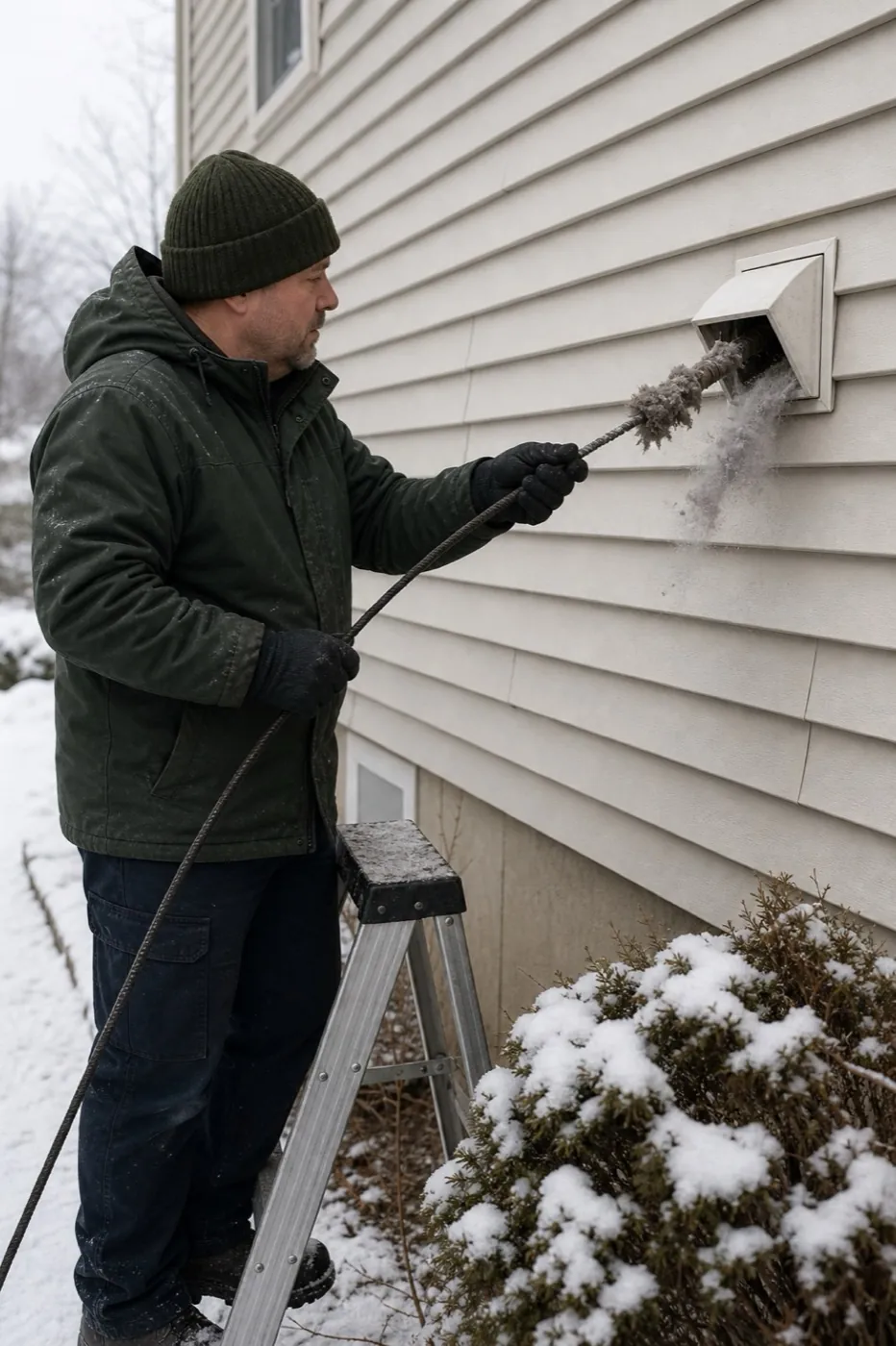
Dryer vent cleaning clears lint from the pipe that runs from your dryer to the outside, along with the exterior hood. It matters because the U.S. Fire Administration lists failure to clean as the leading cause of home dryer fires. A clear vent also helps clothes dry in less time.
What does dryer vent cleaning include?
- The vent run from the back of the dryer to the exterior wall, brushed and cleared of lint
- The exterior hood, checked for lint, nests and a flap that opens freely
- A look at the connection behind the dryer for crushed or sagging hose
- A plain report of what we found
How do I know my dryer vent needs cleaning?
Common warning signs are clothes that stay damp after a full cycle, a laundry room that feels unusually hot or smells musty or like something burning, a dryer that is hot to the touch, and lint around the outside hood. Any of these can mean airflow is restricted. If you smell burning, stop using the dryer and unplug it. For a gas dryer, shut it off following the manufacturer’s instructions. Gas line and electrical work belongs to a licensed professional.
More in our guide on dryer vent fire safety.
Does a long or bendy vent make a difference?
Yes. Lint collects at bends and in long runs. Many codes limit a dryer vent to roughly 35 feet of duct, less an allowance for each elbow, unless the dryer maker says otherwise, and shorter, straighter runs stay cleaner. In many Wisconsin homes the dryer sits in a basement with a long run up and out, which is exactly the kind of vent worth cleaning regularly. Smooth metal duct is generally recommended over ribbed plastic or foil, which can sag and catch lint. Check your dryer manual for what it calls for.
What about winter and cabins?
Snow and ice can block an outside hood, and cold air can make damp air condense and lint stick inside the pipe. Cabins and lake homes add one more problem: an empty house is an inviting place for a bird or mouse to nest in a hood with no guard, which can block airflow and trap lint. Our guide to opening and closing a Northwoods cabin covers it.
Common questions.
How often should a dryer vent be cleaned?
There is no single schedule. Many manufacturers and fire-safety groups suggest at least once a year, and a big household, lots of towels or a long vent run may call for more. If clothes take longer to dry, do not wait for the calendar.
Is cleaning the lint trap enough?
No. The lint trap catches most lint, but some slips past and settles in the pipe and hood. Empty the trap after every load and have the vent cleaned too.
Can I clean my dryer vent myself?
Many homeowners clear the lint trap and the outside hood themselves. A long run, a vent that exits through the roof, or any gas or electrical work is better left to a professional.
Do you work on gas dryers?
We clean the vent. Gas lines and gas appliance repair belong to a licensed professional, and we will tell you if we see something that needs one.
What does it cost?
It depends on the length and layout of the vent run. Email us your town, where the dryer sits and how the vent exits, and we will quote it in writing.
Other things we clean.
Air duct cleaning
Supply and return ducts, vents and registers, cleaned from the furnace out.
Learn more 03Small commercial
Shops, offices and small buildings, scheduled around your hours.
Learn more 04Camera inspections
See what is inside your ducts before you decide a thing.
Learn moreReady when you are.
Request a quote