
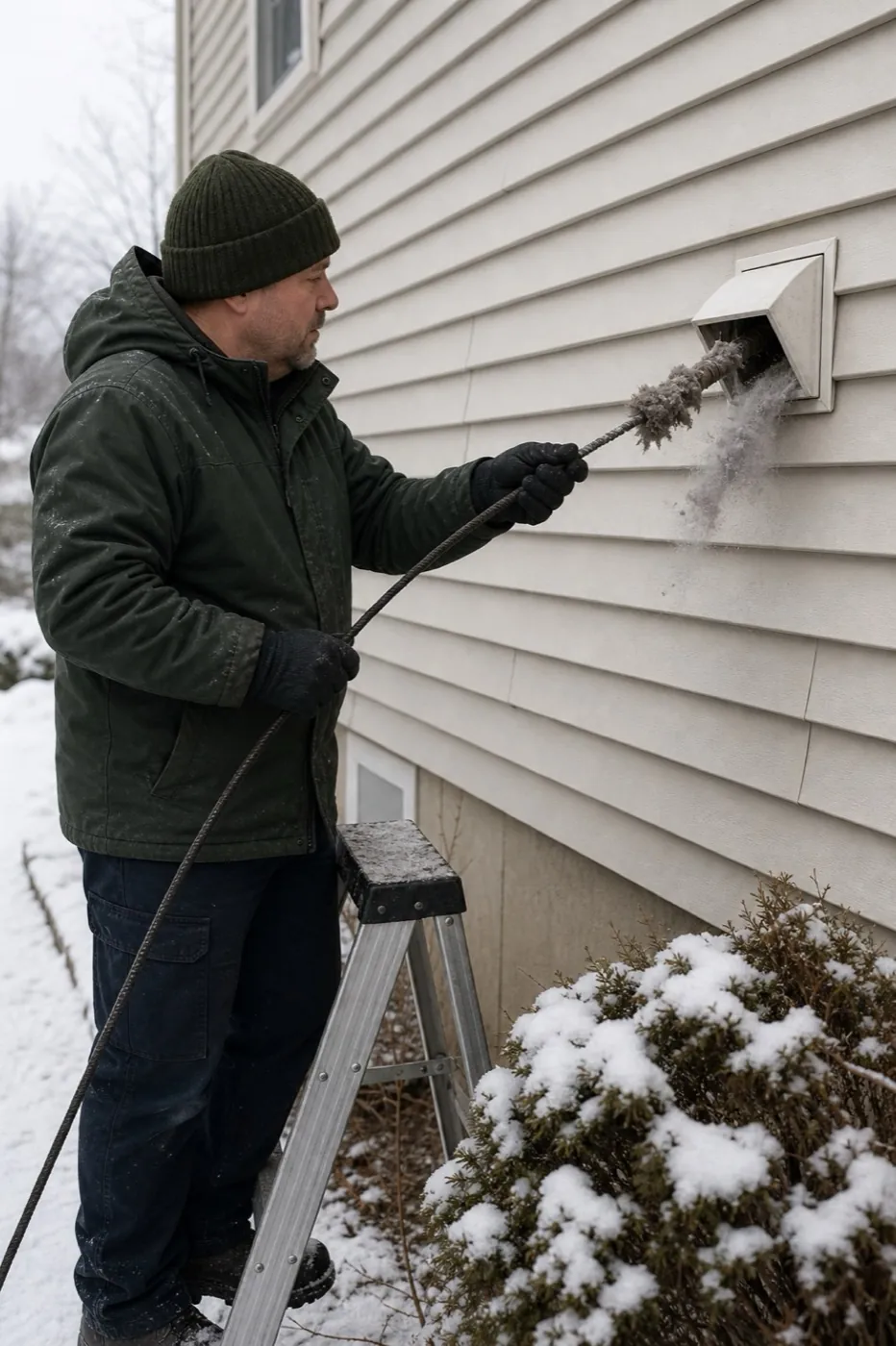
Why lint is the problem
Your dryer moves a lot of warm air, and that air carries tiny fibers out of your clothes. The lint trap catches most of them, but some slip past and settle inside the vent pipe. Over time that soft, dry lint can build up in bends and at the outside hood, where it may slow the airflow and let heat linger.
A simple routine
- Pull the lint off the trap after every load, and rinse the screen now and then if it feels coated.
- Look behind the dryer for a crushed, kinked or sagging vent hose, and keep the space around it clear.
- Step outside and check the hood. The flap should swing open when the dryer runs, with no lint, nest or snow blocking it.
- Have the full vent run cleaned on a regular schedule that fits how much laundry your household does.
Know when to stop and call
If clothes take multiple cycles to dry, the dryer is unusually hot, or you smell something burning, stop using it and unplug it. For a gas dryer, shut it off following the manufacturer's instructions. Gas line, gas appliance and electrical work belongs to a licensed professional, not a do-it-yourself fix.
Common questions
How do I know my dryer vent is clogged?
Clothes that stay damp after a full cycle, a laundry room that feels hot or smells musty, and a dryer that is hot to the touch can all be signs of a restricted vent. If you notice them, stop using the dryer until the vent has been checked.
Is it safe to use a plastic or foil accordion vent hose?
Most manufacturers recommend rigid or semi-rigid metal duct, because ribbed plastic and thin foil can sag and catch lint. Check your dryer's manual for the duct type it calls for.
Can I clean the vent myself?
Many homeowners clear the lint trap and the outside hood themselves. A long vent run, a vent that exits through the roof, or any gas line or electrical work is better left to a licensed professional.
Does a dryer vent matter more in a Wisconsin winter?
Cold weather can make it easier for warm, damp air to condense and lint to stick inside the pipe, and snow or ice can block an outside hood. A winter check of the hood can help keep air moving.
Want a hand? See our dryer vent cleaning page.