
Should I run the furnace after the basement floods?
No. Keep the furnace and air handler off until the water is gone and a licensed HVAC contractor has checked the equipment. Running a system over wet ducts can push damp, dirty air through the house. If the switch or the breaker is reachable only by standing in water, do not go near it. Shut off power only when you can reach it safely, and otherwise ask your electric utility for help.
Floodwater can carry sewage and other contaminants, so treat anything it touched as contaminated. Wear gloves and boots, and keep children and pets out of the area.
Which duct parts can be cleaned and which must be replaced?
The EPA guide Should You Have the Air Ducts in Your Home Cleaned? says that wet or water-damaged duct insulation and fiberglass liner usually cannot be cleaned and should be removed and replaced. Flexible duct with an insulated jacket falls in the same group.
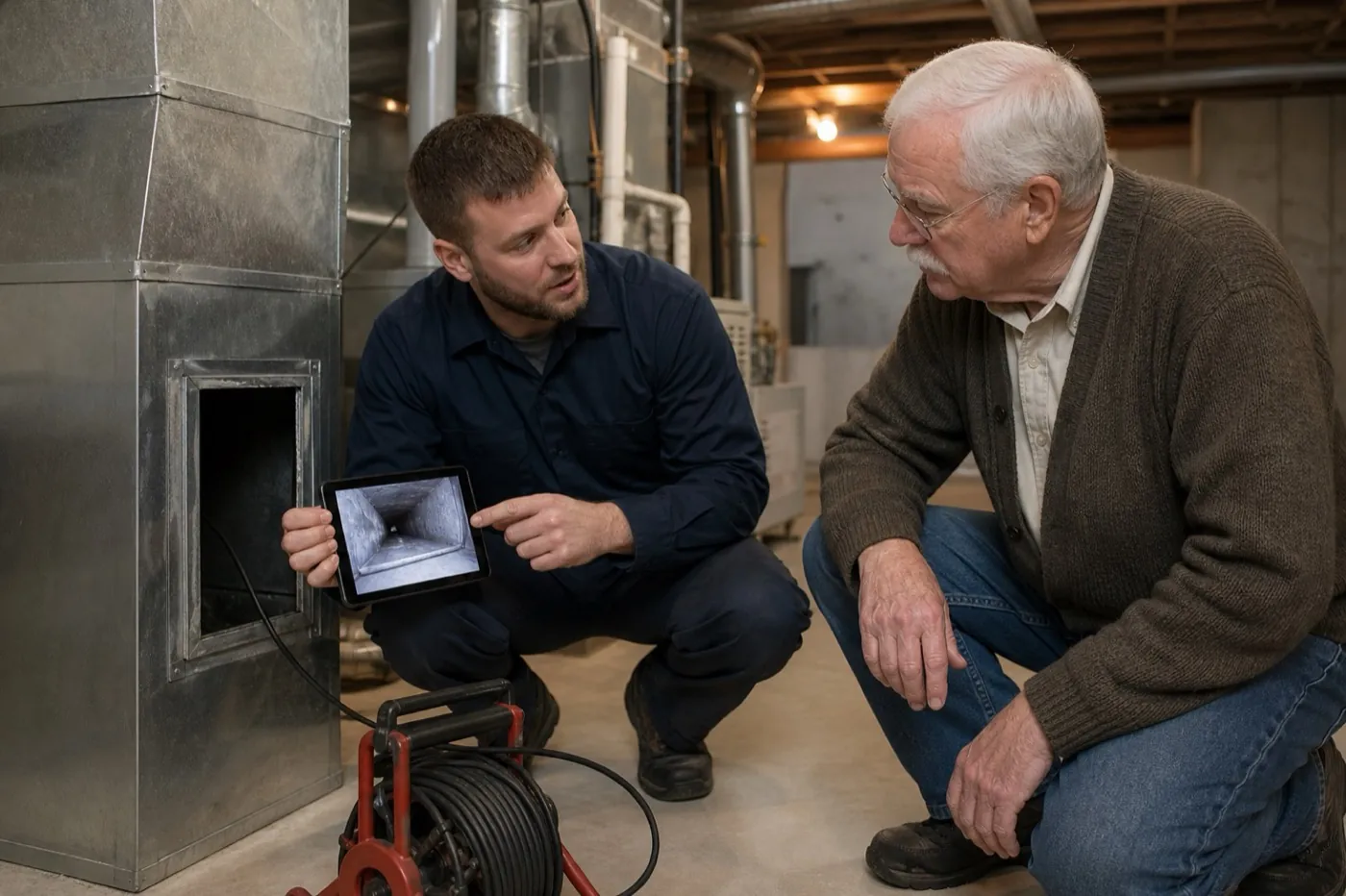
Sheet metal ducts can often be cleaned once they are fully dry. A camera look inside shows which sections stayed clean and which took on water, so you know what to replace and what to leave.
Can mold grow in ducts after a flood?
It can. Damp insulation, dust, and a warm furnace give mold what it needs, and the risk grows the longer things stay wet. Dry the basement first with a dehumidifier and fans, and open the windows when the outside air is drier than the air inside. Drying the space comes before anything else, because wet walls and floors will keep wetting the ducts.
Musty smells that come back when the system runs, or visible fuzzy growth on insulation, are reasons to have a professional look rather than guess.
Who should I call first?
Work in this order:
- If the furnace, water heater, or electrical panel was submerged, call the gas or electric utility.
- Call a licensed HVAC contractor to inspect and test the furnace before it runs again.
- Call a water-damage or mold professional for the walls, floors, and anything that stayed wet.
- Once all of that is done and the space is dry, ask about duct cleaning or replacement of the damaged sections.
Furnace repair, water-damage restoration, and mold work are outside what a duct cleaning visit covers.
Common questions
Can I just dry out the ducts with a fan?
A fan helps with sheet metal that only got damp on the surface. It will not dry wet insulation or flexible duct, which usually has to be replaced. Dry the basement first, then have the ducts looked at.
Is it safe to turn the heat back on after a flood?
Not until a licensed HVAC contractor has checked the furnace and the ducts are dry. Water can damage controls, burners, and wiring in ways you cannot see from the outside.
Does homeowners insurance cover duct cleaning after a flood?
It depends on the policy, so ask your insurer or agent. Coverage for flood and water damage differs from one policy to the next, and it is worth asking before work starts.
How do I know if mold is growing in my ducts?
Look for a musty smell when the system runs, or visible fuzzy or blotchy growth on registers and insulation. A camera inspection can show the inside of the ducts, and a mold professional can test.
When the basement is dry and the equipment has been checked, see how air duct cleaning works.