
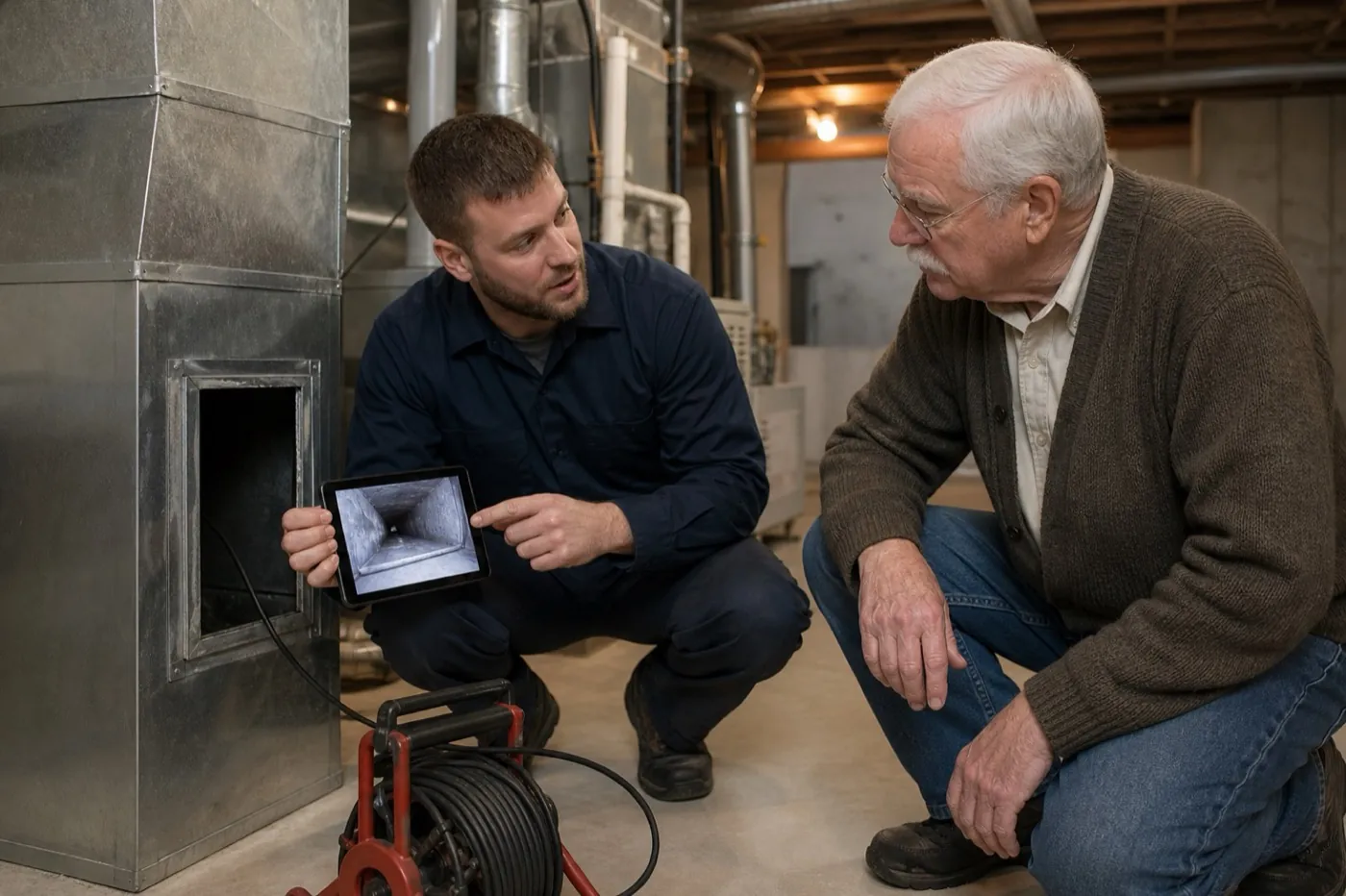
What can a duct camera see?
A duct inspection camera is a small lens on a flexible cable that is fed into the ductwork through a register, a service opening or a cut made for the purpose. It lets you see the inside of the metal, not just the register face. It can show:
- Dust, lint, pet hair and debris, and roughly how much of it there is
- Construction dust or leftover material after a remodel
- Disconnected or loose joints and crushed or sagging sections
- Signs of mice or other pests, such as droppings and nesting material
- Moisture, staining or what looks like growth, which should be looked at by a professional
What can it not see?
A camera sees only the runs it can reach, and it cannot take a turn at every elbow. It cannot tell you whether a stain is mold or just dust and rust, because only testing can do that. And it is not a diagnosis of your furnace or of how well your system is balanced. For that, call a licensed heating and cooling contractor.
When is a camera inspection worth doing?
It is worth doing when you are not sure whether a cleaning is needed. Typical moments are after a remodel, when buying or moving into an older home, when you notice dust blowing from the registers or an odd smell, or when you suspect pests. Looking first means you decide with your own eyes rather than on a sales pitch.
Ask the company whether you will see the live picture and whether photos or video are shared afterward.
Common questions
Does a camera inspection replace a duct cleaning?
No. The camera shows you what is in the ducts so you can decide whether to clean. If the ducts look clean, you may not need a cleaning at all.
Can a camera find mold?
It can show growth or staining that looks suspicious, but only a lab test can confirm mold. If you suspect it, the moisture source has to be found and fixed, and a licensed professional can advise.
Can a dryer vent be inspected with a camera?
Often yes, especially for straight or gently bent runs. Very long or tight runs can be harder to see. Ask the company what it can reach in your home.
Do you need to cut into my ducts?
Usually the camera goes in through a register or an existing opening. Some inspections need a small access opening in a trunk line, which should be discussed with you first.
Want a hand? See our camera inspections page.