
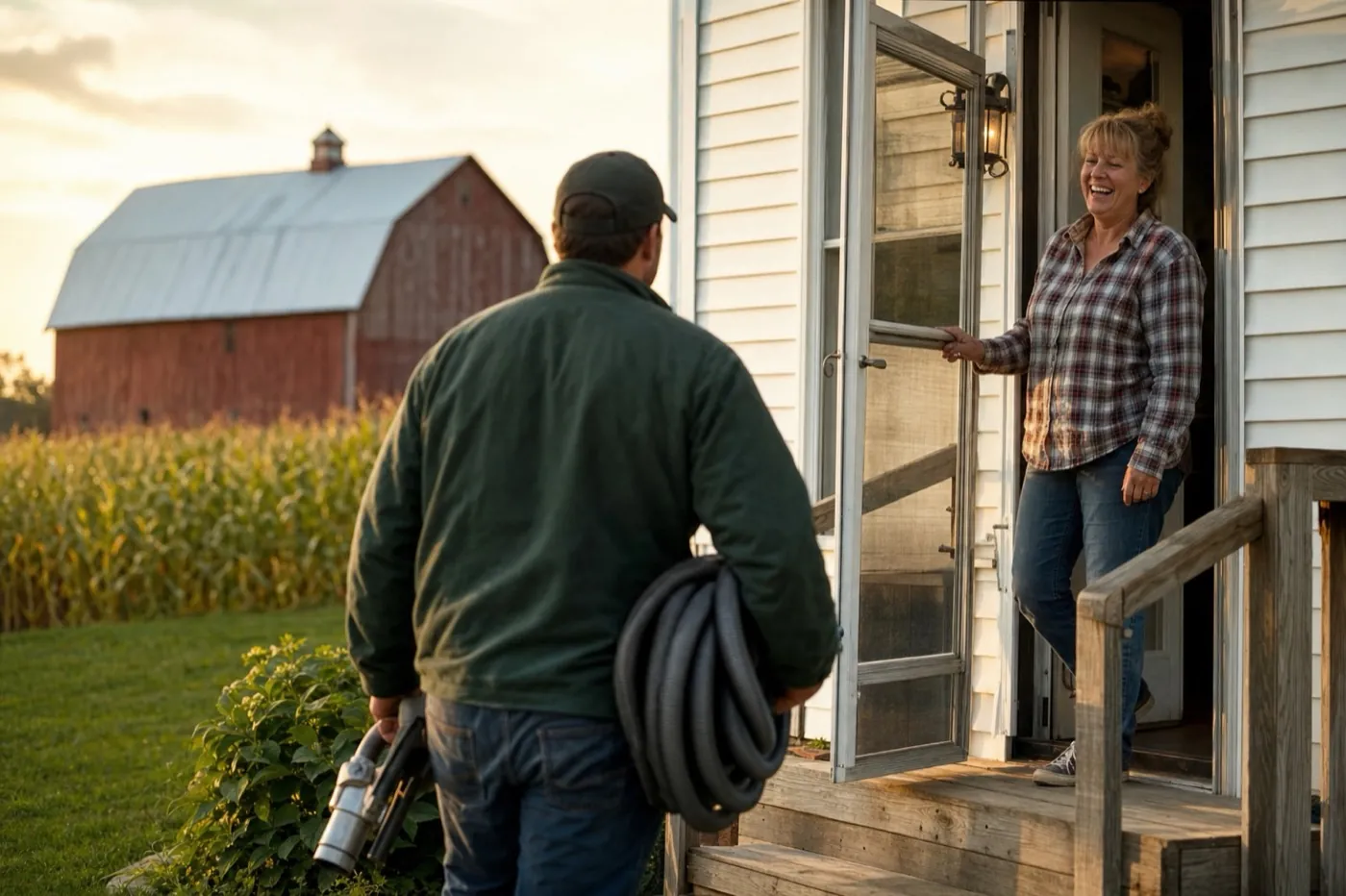
Additions and mismatched duct runs
A farmhouse is rarely one build. A kitchen, a mudroom or an upstairs bedroom may have been added in a different era, and the ducts that serve each part can differ in material, size and route. Some runs are long and awkward, and some rooms may share a branch that was never meant to carry that much air. Knowing which part of the house came when helps explain uneven heating and where dust collects.
Damp basements, crawlspaces and rodents
Fieldstone basements and crawlspaces can stay damp, and ducts that run through them may be loose, rusty or open at the seams. Those gaps can pull in dust and let mice and other animals reach the ducts and returns. Look for droppings, nesting material and chewed insulation near registers and joints. If you find signs of animals, a pest-control professional should deal with them before any cleaning starts.
Field dust, harvest and livestock
Living near fields and barns means more fine dust in the air, and it is heaviest around harvest. Filters can load faster during that season, so check them more often and replace them when they look coated. It also helps to look at register boots, the short fittings where a duct meets the floor or wall, and seal or tidy any gaps you can see.
Wood and dual-fuel heat
Many farmhouses use a wood stove or a second heat source alongside the main system. Duct and dryer vent cleaning is separate from heating-equipment work. The stove, the furnace, the chimney and any gas or electrical connection are work for a licensed professional.
Common questions
Why do farmhouse ducts often look mismatched?
Many farmhouses grew room by room over decades, and each addition may have been connected to the heating system in a different way. You can end up with different duct materials, sizes and layouts in one house, which is worth knowing before anyone plans a cleaning.
How can I tell if rodents have been in my ducts?
Droppings or shredded nesting material near a register, scratching sounds from the walls or floor, and an odd smell when the system starts can all point to a visitor. Stop running the system and call a pest-control professional before any cleaning.
Should I change my filter more often during harvest?
Often, yes. Dust from fields and grain handling can load a filter faster than usual, so it helps to look at it more often in the fall and swap it when it looks coated. Check your equipment's manual for the filter size and type it calls for.
Does a wood or dual-fuel heat source change anything?
Soot and ash dust can settle around a wood heat source, and the venting for that equipment is separate from the air ducts. Furnace, stove and chimney work belongs to a licensed professional, and that work is separate from duct cleaning.
Want a hand? See our cleaning services or where we work.