
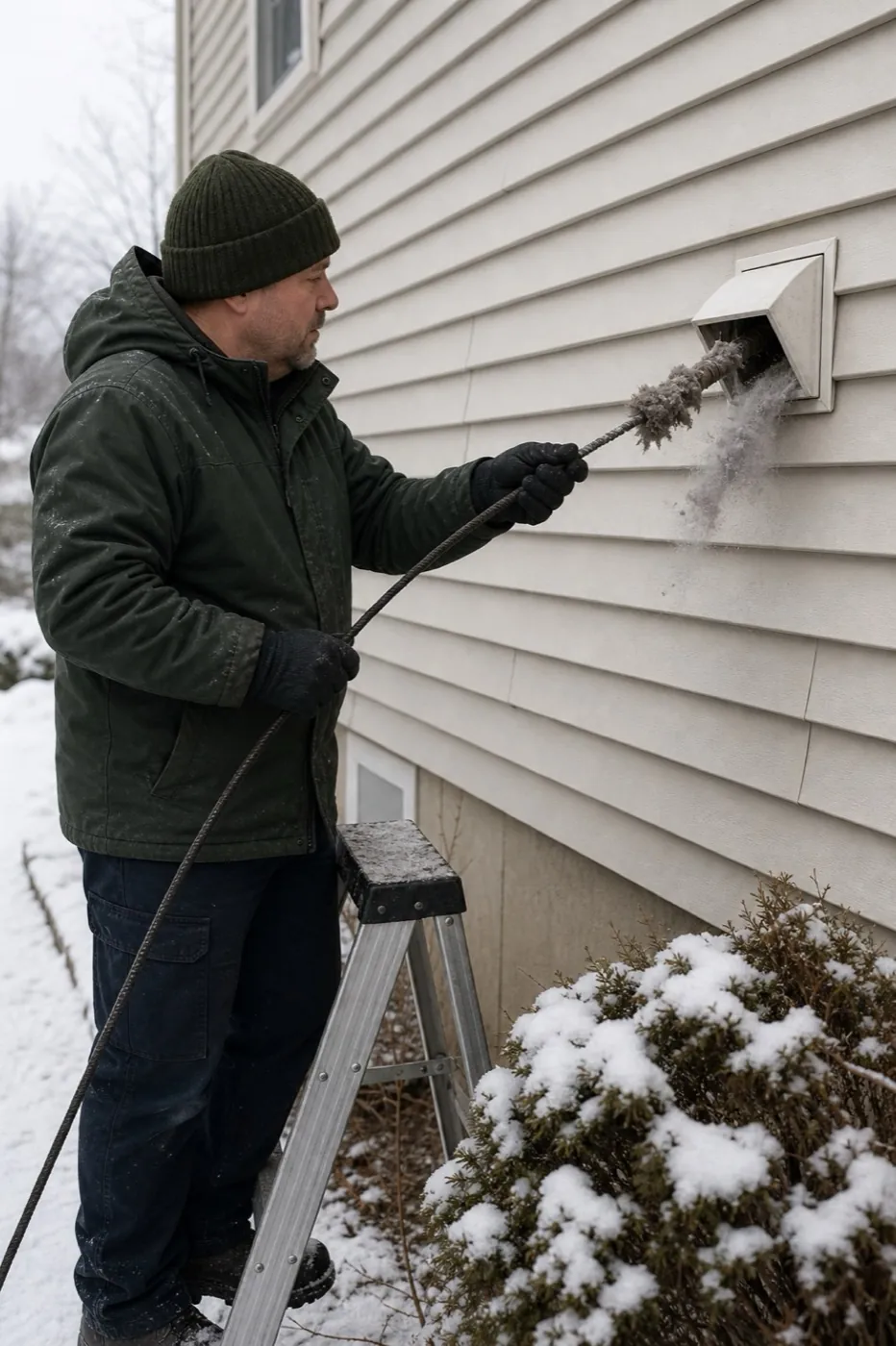
Why does a blocked dryer vent matter?
A dryer pushes hot, damp air and lint out through the vent. When snow or ice covers the hood, that air has nowhere to go. Heat and moisture build up, lint collects inside the line, and the dryer works harder to do the same job. With a gas dryer, a blocked vent can also push combustion exhaust back into the house. The Consumer Product Safety Commission (CPSC), the federal agency that publishes dryer fire guidance, lists poorly vented dryers among the common causes of dryer fires.
How do I safely clear snow and ice from the vent hood?
- Turn the dryer off and let it cool.
- Brush or scoop the snow away from the hood by hand or with a soft brush.
- Knock loose ice gently. Do not chip hard at the flap, and do not use a heat gun or open flame, especially on a plastic hood.
- Check that the flap swings open freely and closes again.
- Run the dryer briefly and confirm warm air pushes the flap open outside.
Low hoods near grade, hoods under decks, and hoods beside drifts are the ones to check after every storm.
How can I stop it happening again?
Check the hood after each storm, and keep the area around it clear when you shovel so you do not pile snow against it. Lint mixed with moisture can freeze the flap open or shut, so a clean line helps the flap move. If frost or ice keeps forming inside the hood, that can point to lint buildup or a long or sagging run of pipe. A hood that keeps getting buried may be in a poor spot; a licensed contractor can advise on that.
When should I get the vent line cleaned?
Look for loads taking longer to dry, a laundry room that feels hot, or a burning smell. Our guide to the signs your dryer vent needs cleaning covers what to watch for. If you have a gas dryer, keep working carbon monoxide alarms on every level, and if you ever smell gas, leave the house and call your gas utility. For the full picture on keeping a vent line safe, see our dryer vent fire safety guide, or read about dryer vent cleaning.
Common questions
Can a snow-blocked dryer vent cause a fire?
It can add risk. A blocked vent traps heat and lint, and lint is fuel. Stop using the dryer until the hood is clear and the flap opens freely.
Is it dangerous to run a gas dryer with a blocked vent?
Yes, it can be. A blocked vent can push exhaust back into the house. Stop the dryer, clear the hood, keep carbon monoxide alarms working, and call your gas utility if you smell gas.
Why does my dryer vent hood frost over in winter?
Warm, moist dryer air meets freezing outdoor air and condenses. Some frost is normal, but heavy ice can mean lint buildup or a long or sagging vent run.
Should I raise or move a vent hood that keeps getting buried?
Ask a licensed contractor. Moving a hood changes the vent run and the wall opening, so it is not a quick fix, and it is not something to do yourself.